Brown Spot Needle Blight on Longleaf Pines in Moore County
(Updated: July 16, 2026, 12:29 p.m.)
Living here in Moore County and the Sandhills, you've probably planted (or are thinking about planting) longleaf pines to help restore our beautiful native ecosystem.
But if your young trees are suddenly showing lots of brown needles, yellowish-brown spots, or white, fluffy areas at the base of the needles this spring, it's easy to worry that something is seriously wrong.
Don’t panic. What you’re most likely seeing is Brown Spot Needle Blight, a very common issue for young longleaf pines in our fire-suppressed landscapes. Understanding the tree’s unique natural life cycle makes all the difference in knowing what to do and what not to do.
The Famous “Grass Stage”
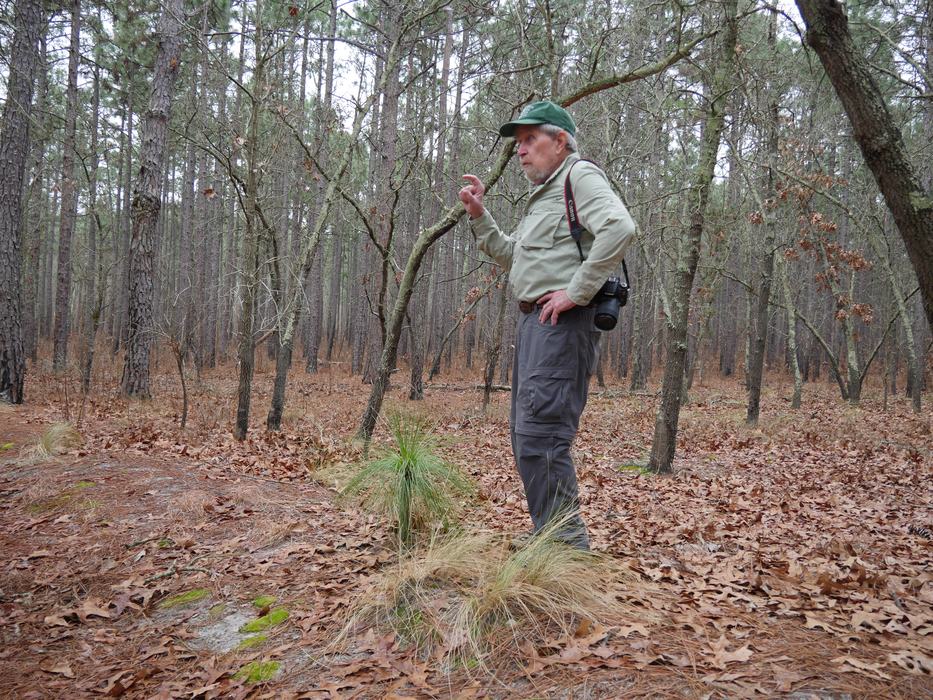
Bruce A. Sorrie leading a nature walk for the Sandhills Chapter of the North Carolina Native Plant Society, explaining the ecological relationship and similarities between the grass stage of longleaf pines(left) and Carolina wiregrass(right) in the longleaf pine ecosystem.
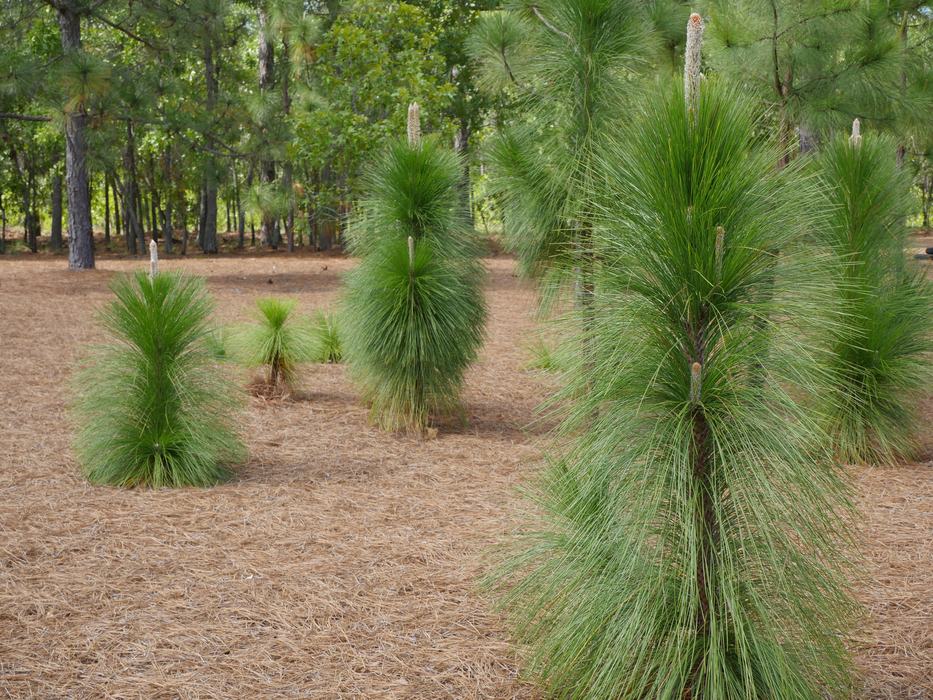
Young longleaf pines don’t look like regular trees at first. For the first several years, they grow in what is called the grass stage. During this time, the tree focuses on building a strong root system instead of growing tall. It often looks like a dark green clump or fountain of needles sitting low to the ground (sometimes staying only ankle-high for many years).
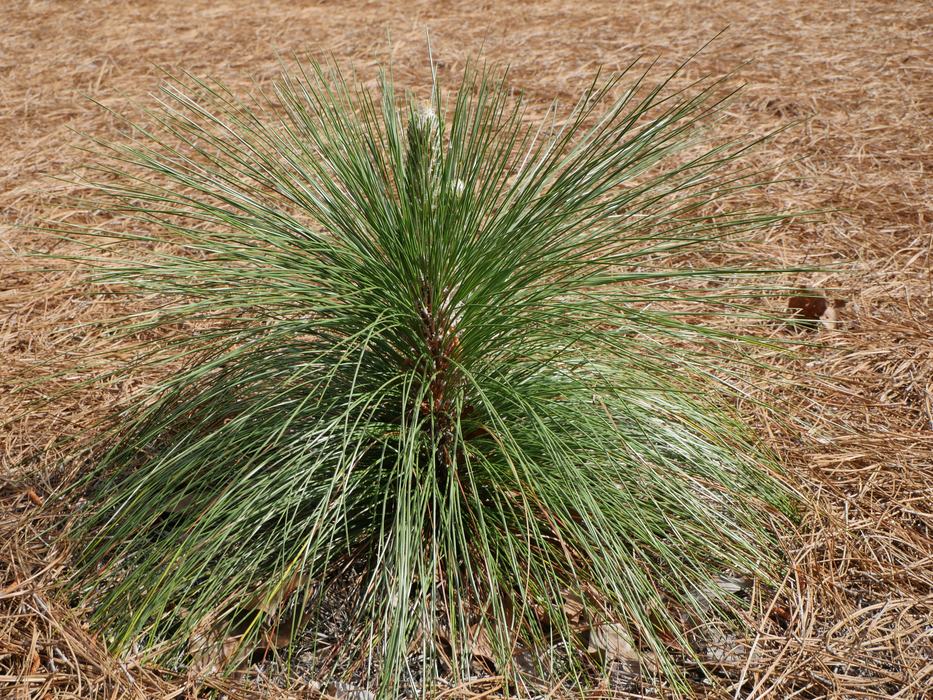
Longleaf Pine in Grass Stage Within a Residential Landscape
In spring, when new needles push out, you can easily see into the center of the clump. At the base of the needles, you’ll often notice a white, tufty area. This is the needle sheath, a natural protective covering. It starts out white and fuzzy and can easily be mistaken for white scale insects or a pest if you’ve never seen it before. Over time, the sheath turns brown and papery as the needles mature.
Close-up of early spring growth on longleaf pine, highlighting the soft, white, fuzzy needle sheaths as new needles emerge and elongate.
Why Longleaf Pines Behave Differently
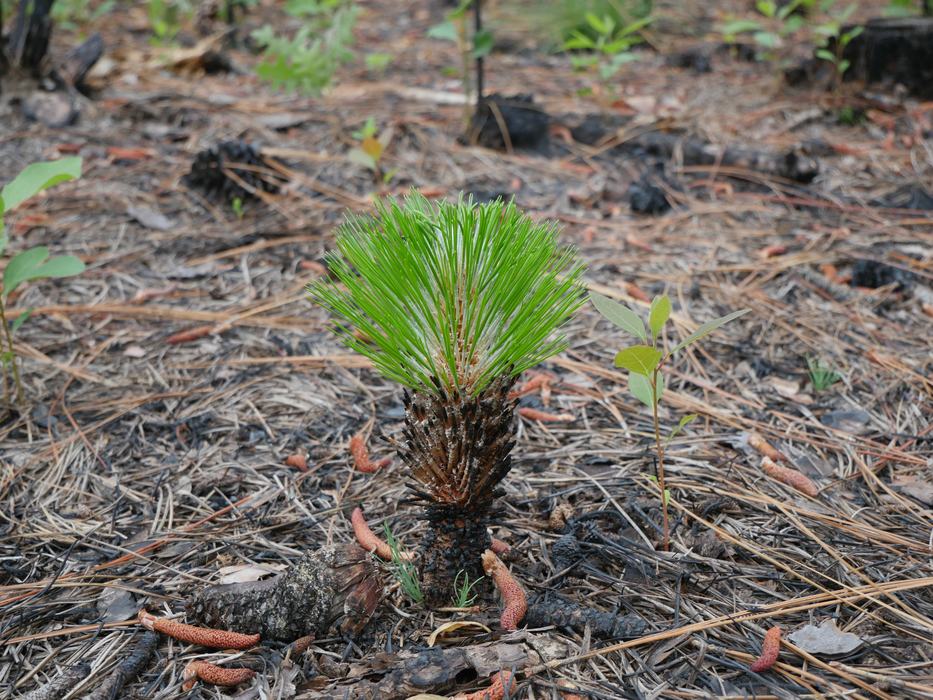
Juvenile longleaf pine resprouting after a recent prescribed burn off the Paint Hill Trail at Weymouth Woods Sandhills Nature Preserve, showing early post-fire recovery in the longleaf pine ecosystem
Longleaf pines are naturally adapted to frequent, low-intensity fires. In the grass stage, the tightly packed needles protect the growing tip (terminal bud) from heat, making the young tree quite fire-resistant.
In our modern neighborhoods, fire is absent. Without regular burning to clear away extra needles and reduce disease, longleaf pines often hold onto more needles and look fuller and denser than they would in a natural, fire-maintained landscape. This isn’t necessarily a bad thing; it just means we have to manage them a little differently as homeowners.
A cluster of longleaf pines grows within a residential environment where natural fire regimes are absent, resulting in conditions that differ significantly from the species’ historically fire-dependent ecosystems.
What Brown Spot Needle Blight Looks Like
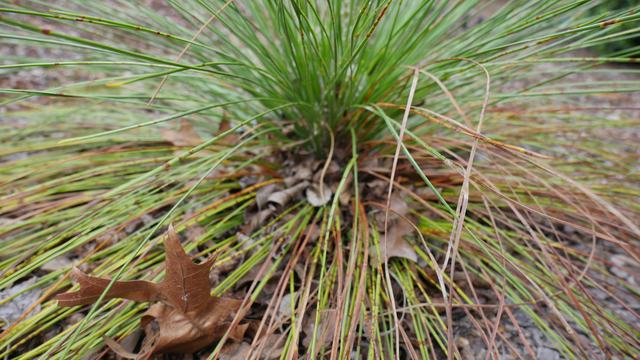
Close-up of green longleaf pine needles showing symptoms of Brown Spot Needle Blight, taken at a homeowner’s property following concerns about tree health.
Brown Spot Needle Blight mainly affects longleaf pines while they are in the grass stage or just starting to grow taller. You’ll usually notice symptoms between April and July:
Small yellowish-brown spots appear on the older needles, often starting lower in the clump.
Needle tips turn brown while the base may stay green for a while.
Heavy infection can cause many needles to drop, making the tree look thin or unhealthy.
The good news is that most healthy seedlings can grow out of this phase. The disease rarely kills the tree, though repeated heavy infections can slow its progress. Once the tree starts growing upward and leaves the grass stage, BSNB usually becomes much less of a problem.
How the Disease Spreads
The fungus spreads most easily in moist, humid conditions. Spores are carried by rain, mist, wind, or by touching infected needles. It enters the needles through tiny pores on the surface.
What Can You Do About It?
Improve Growing Conditions
Plant in well-drained soil and avoid overcrowding.
Give young trees plenty of sunlight and good air circulation.
Remove competing weeds
Water at the base of the tree rather than wetting the needles.
Reduce Excess Moisture and Inoculum Around the Tree
While the tree is still in the grass stage (low to the ground), you can help by:
Gently removing heavily infected brown needles by hand (if practical). This reduces the amount of fungus present.
Raking away excess pine straw or thick mulch right around the base of the seedling. A thinner layer or bare soil near the trunk can improve airflow and lower humidity close to the needles.
Longleaf pine in a residential setting after removing infected needles and clearing pine straw from the base of the plant.
Important notes:
Only do light cleaning (don’t stress the young tree by pulling too aggressively).
Dispose of the removed needles in the trash or burn them if allowed (do not compost them).
Once the tree starts growing taller and leaves the grass stage, these steps become less necessary.
Fungicide Options
In residential yards where prescribed burning isn’t practical, a fungicide can help protect new needles from brown spot, especially if you have heavy infection pressure year after year.
That said, fungicides should not be the first or automatic solution. Many young longleaf pines in the grass stage can handle mild to moderate brown spot and will grow out of it with good care, patience, improved airflow, and sanitation (such as removing heavily infected needles and excess mulch).
Use a fungicide only when the disease is consistently heavy and you want extra protection for new growth. Applications are most effective when started in early spring as the new needles begin to emerge.
For specific product recommendations, timing, and safe use, contact your local NC Cooperative Extension agent. We can help you decide whether a fungicide makes sense for your situation and recommend the best approach.
Consider Resistant Stock for Future Plantings
Some improved longleaf pine seedlings are more resistant to brown spot. These can be a smart choice when planting new trees.
Final Thoughts
Brown Spot Needle Blight is a frequent spring concern in the Sandhills, but it’s very manageable once you understand how longleaf pines grow. These trees are worth the effort. They support our unique ecosystem, provide habitat for wildlife, and become stunning landscape features as they mature.
If your trees look particularly bad or you’re unsure what you’re seeing, feel free to reach out. We are happy to help homeowners better understand and care for their longleaf pines.
Have questions about your specific situation? Contact your local NC Cooperative Extension office for personalized advice.
For more resources, check out the following links.