Purpose
NC State faculty and staff train MGVs to be highly effective community educators providing unbiased, research-based, environmentally sound information about growing lawns, fruits, vegetables, trees, and ornamentals. They focus specifically on issues of importance in their local communities related to residential gardening and landscaping, including environmental stewardship, water conservation, water quality preservation, energy conservation, green waste reduction, home food production, wildlife management, sustainable communities, and health and wellness for children and adults.MGVs expand Extension’s capacity to meet the needs of the gardening public. Our volunteers are motivated by the opportunity to participate in a quality horticultural course, receive answers to their own gardening questions, interact with people who have common interests, help others expand their gardening knowledge, and make a difference in their community. Major tenets of the program include the following:
1. Local Needs.
Our programs and staff reflect the needs of the communities they serve. The land-grant university system was built to provide access to higher education and serve the needs of the common person. MGVs continue the land-grant university tradition by ensuring that the programs and people delivering them are available and applicable to all residents.
2. Critical Issues.
Projects must be relevant to the larger issues facing society—protecting environmental quality, ending hunger, building strong and safe neighborhoods, and growing healthy children.
3. Public Awareness. Extension and Master Gardener volunteers must let the residents, decision-makers, businesses, and communities of North Carolina know about the value of the work they do by illustrating its relevance to public goals.What do you learn during the Master Gardener Volunteer class?
The class is based on the Extension Gardener Handbook and covers everything from soils to wildlife, from apples to zucchini.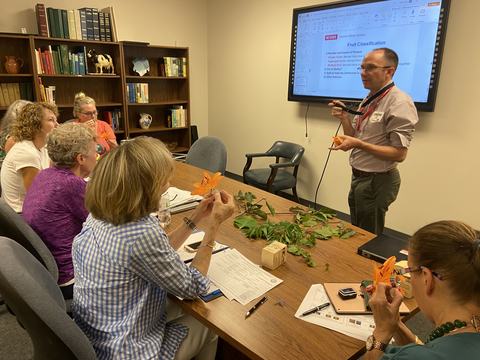
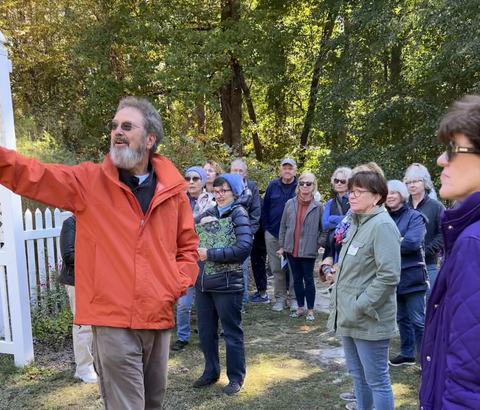
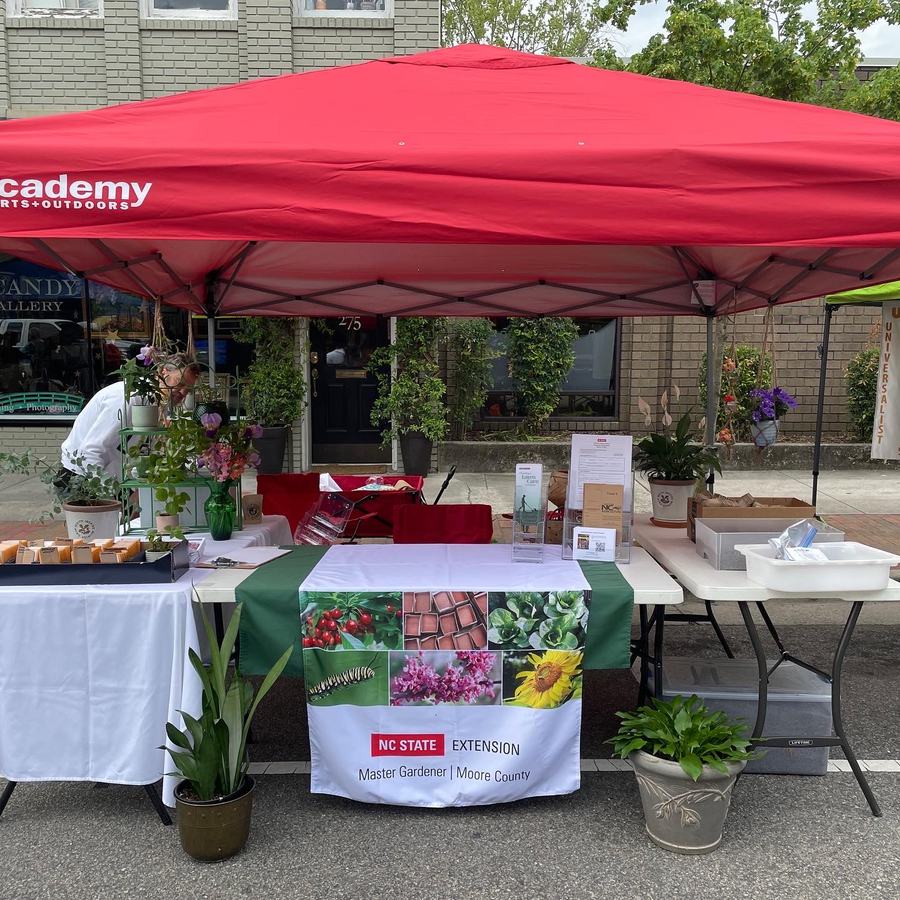
Volunteer Opportunities in Moore
- Answer home gardener questions on the Master Gardener Helpline
- Write articles for local publications about gardening
- Lead workshops for home gardeners on topics of interest, such as native plants or pruning hydrangeas
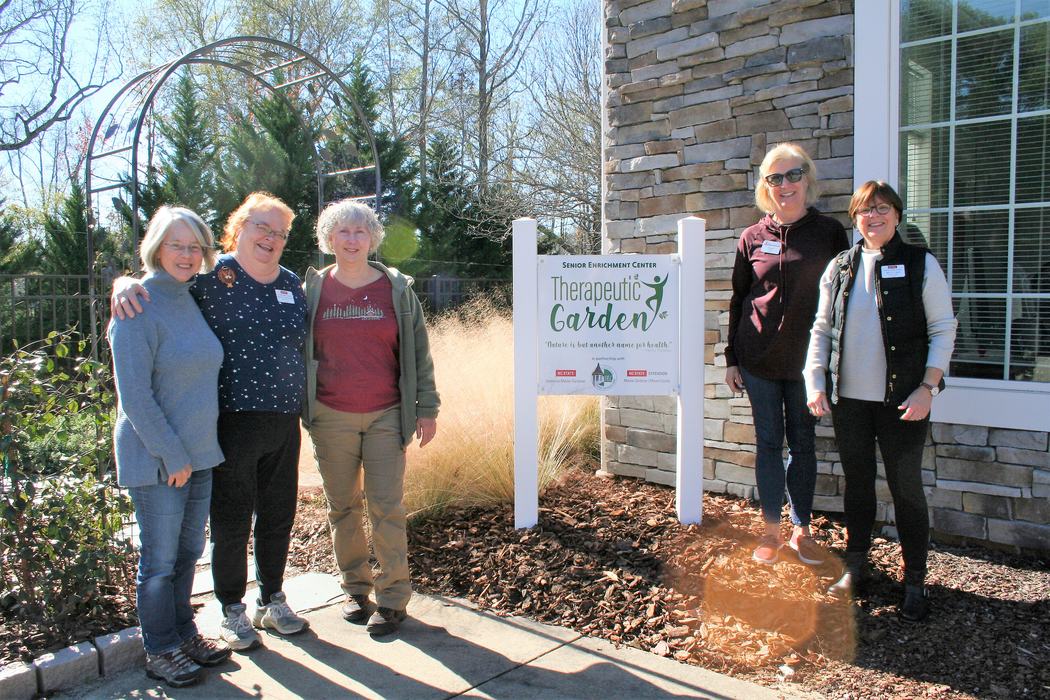
- Work in one of our three therapeutic horticulture gardens or one of our three demonstration gardens (see the list below)
Demonstration Garden List
Books and Bees Garden
Flagship Garden
Pinehurst Greenway Wildlife Habitat
Visit NCSU Extension Master Gardener Volunteers to find out more about about the program.