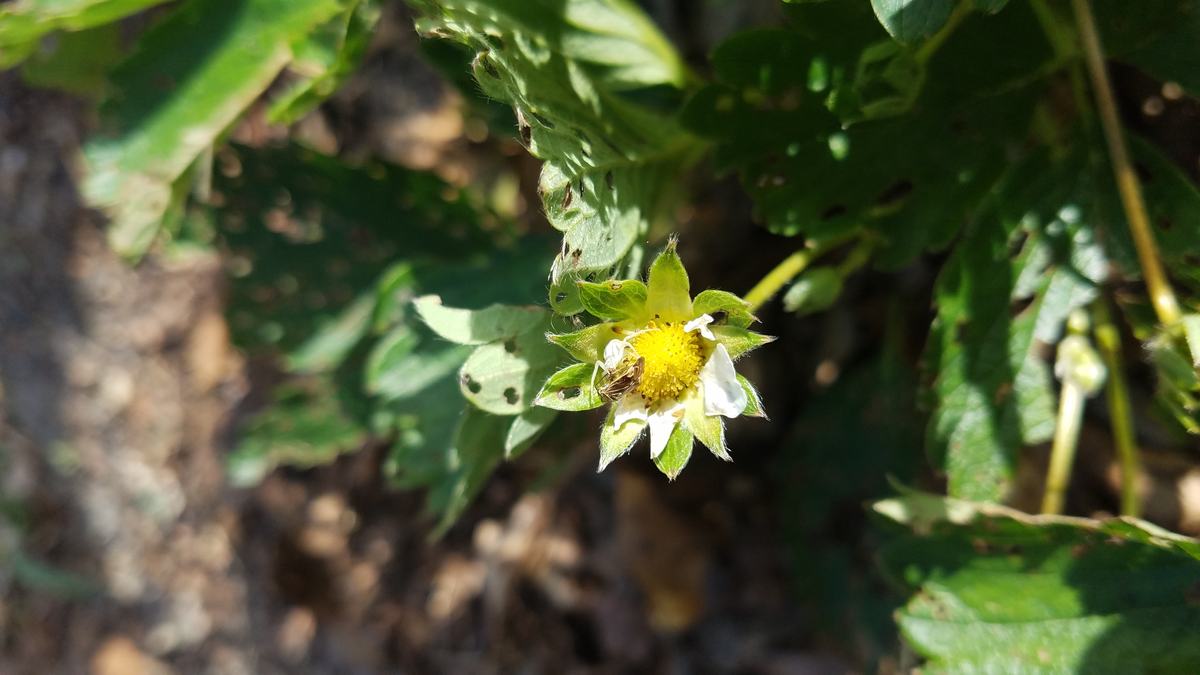
In most gardens, if you look close enough, you can see all kinds of interesting things. You might notice a new plant part that you hadn't noticed before or a bee buzzing around inside of a flower. You might also see a spider. Typically the first instinct is to squish the spider, because there are some that can be quite dangerous for humans. However, not all spiders are harmful. Crab spiders (Family Thomisidae) for instance are a beneficial spider. Some of the genera of this family can be found on tree bark or on the ground, but there are some within this family that will hide inside white or yellow flowers and ambush prey that comes to feed on the flower or the pollen.
The Goldenrod Crab Spider (Misumena vatia) will change its color by producing or excreting a yellow pigment. It takes 6 days for the spider to turn white, whereas it takes 10-25 days for the spider to turn yellow, because the process for producing the pigment takes longer than the process of excreting it.
You might be thinking, "Wait, if this spider feeds on pollinators, isn't that a bad thing?" This was my train of thought as well, but the presence of a predator causes pollinator species to develop helpful traits over several generations, such as stronger eyesight and quick reflexes. This ultimately benefits the pollinator species and allows them to better defend themselves against other predators.
These little spiders also feed on pest insects, such as the Tarnished Plant Bug (Lygus lineolaris). The Tarnished Plant Bug is a pest that has piercing, sucking mouth parts and feeds on parts of a plant that are rapidly growing, like the new growth of a bud or flower. This can create big problems for growers of strawberries or other crops that depend on proper flower development. Crab spiders can serve as a form of biological control against such pests and keep the ecosystem in balance.