A recent trip to Slow Farm in Cameron, North Carolina revived an interest in a plant that I feel I have somewhat overlooked. Goldenrod (Solidago sp., is a fascinating and useful plant for so many reasons. At Slow Farm, they use the plant to make different products, one of which is a tea made from the dried leaves.
Goldenrod Goodness
(Updated: Oct. 25, 2023, 11:54 a.m.)
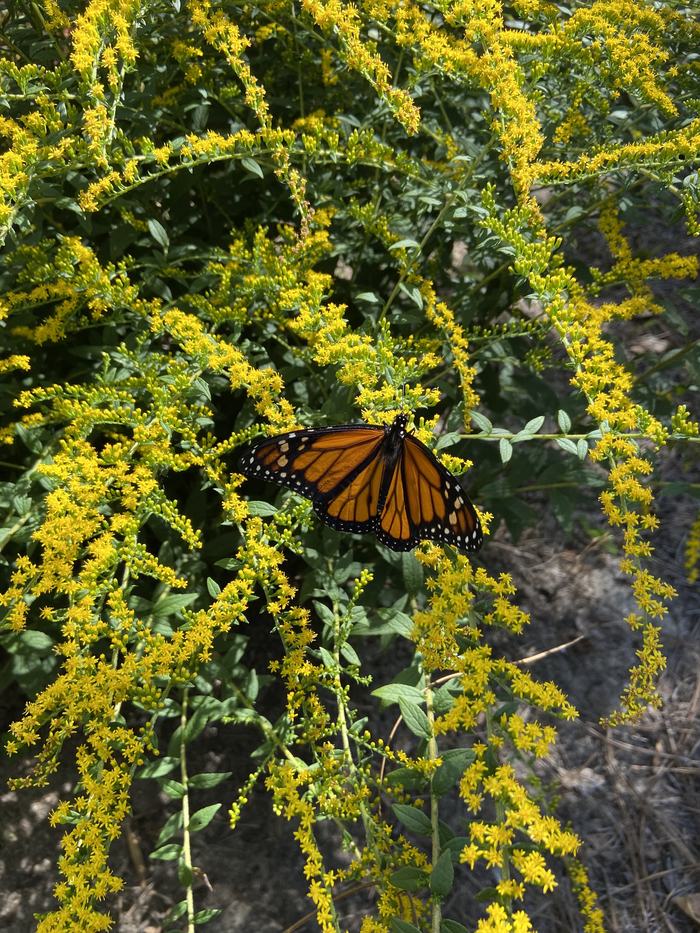
Goldenrod is found all over the world, in Europe, Asia, North Africa, and North America. With over a hundred species, there are 11 native to North America, and you can see it all over the place this time of year. This is excellent news for wildlife, particularly the pollinators and predator insects! The nectar-rich flowers of the plant attract native bees and honey bees alike and also butterflies, moths, and wasps—yes, we want to attract wasps! The late-season bloom time is another reason we love it. Not only does it bring a bright, cheerful yellow into the landscape, but the nectar at this time of year is crucial for migrating monarchs and native bees preparing for winter. Soldier beetles are another fan of goldenrods delicious pollen and nectar, but while they’re in the neighborhood, they’ll also feed on some of the lingering soft bodied insects, like aphids.
Historically, this plant has been used by Europeans and Native Americans to treat different ailments. The genus name, can be translated as “to make whole.” The properties of the plant, including secondary metabolites have been explored for their healing abilities. It has been used traditionally to treat diabetes and tuberculosis and to heal wounds. In modern times, it is mostly used to help with water loss in the body. The tea made from dried leaves of goldenrod has been shown to have a calming effect and has been used to treat stress and depression.
With so many wildlife benefits and potential medicinal benefits, maybe we should all be growing this magnificent plant. Of the 11 native varieties, there’s surely one to fit almost any site conditions you might have. Whether you have a woodland garden or a sunny, boggy raingarden, there’s a goldenrod that is sure to suit!
Join our mailing list!
Enter your email address to receive updates.
Written By

More About