I heard a podcast the other day that sparked my interest. It was all about mulberry trees. The common mulberry, Morus rubra, is a native to North Carolina. In fact, when I first moved to NC three years ago, I lived in an apartment in the southern part of Moore County. There was a large tree that produced long clustered drupes of fruit, similar in appearance to blackberries. The fruit was very attractive to birds, and the fruit would often drop on the balcony of the apartment and stain the wood. I would later learn that this was a common mulberry tree.
Marvelous Mulberry
(Updated: Nov. 16, 2023, 6:31 a.m.)
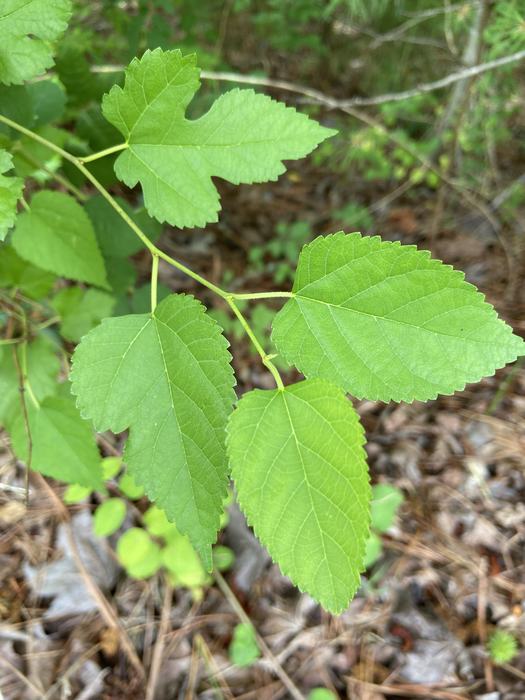
The leaves of the tree can present in several different shapes, ranging from a basic heart shape to a deeply lobed leaf shape that can resemble a mitten or a fig leaf, which is fitting, since it is in the same family as figs, Moraceae. The margins, or edges, of the leaves have a rough serration.
The tree grows quite tall, reaching 30 feet in some cases. You can find it in all regions of the state, but it is most often found in Central NC in rich, moist, well-drained soil. It likes full sun to part shade, but will have more fruit in full sun.
That fruit can be delicious and sweet when it is ripe, but the unripe fruit, along with the milky sap that the tree produces, is poisonous. Fruiting typically occurs in late summer, but the fruit is not a great storer. Because of this, a lot of people will use it to make jams, pies, muffins, or cakes.
Native Americans used the plant medicinally. It was also historically used as a source of light, soft, durable timber for fencing or barrels. It has a ton of wildlife value, as forage for pollinators, small mammals, and birds. The tree is resistant to deer, drought, pollution, and even fire. There are also studies are being conducted to look at mulberry as a potential feed for livestock due to the high protein content of the foliage.
Since it is such a hardy tree, it can be aggressive and weedy in some cases and will self-seed prolifically. It is a great favorite of many people, because it is so resistant to many of the challenges that we face and is a relatively low maintenance fruit tree. It is definitely worth a consideration for your landscape, as long as you don’t mind a little spreading and a little bit of a mess.
Join our mailing list!
Enter your email address to receive updates.
Written By

More About